BMW Water Pump Engine
fits model: 750, 740, 540. make: Bmw. year: 2017–2020.
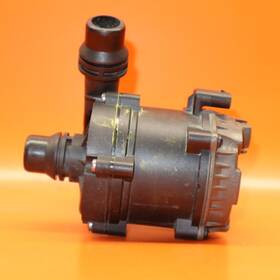
( Manufacturer Part Number: 11518482744 ), ( Part Type: Pump Engine )
Review BMW Auxiliary Water Pump Engine 1151 8482744 Oem fits 750 740 540 2017–2020
The **BMW N57/N63 750i/740i/540i Water Pump (Part Number: 11518482744)** is a precision-engineered component designed to maintain optimal cooling efficiency and engine performance in BMW s high-performance V8 models from the 2017 through 2020 model years. This water pump is a critical part of the engine s cooling system, circulating coolant through the radiator, engine block, and cylinder heads to prevent overheating and ensure consistent power delivery. Crafted from high-quality materials, including a durable aluminum housing and a sealed mechanical seal, this water pump is engineered to withstand the demanding thermal and mechanical stresses of BMW s twin-turbocharged V8 engines, which are found in the **7 Series (750i/740i), 5 Series (540i), and X5/X6 (550i/540i)** variants.
The **11518482744** water pump features an integrated **thermostat housing**, which regulates coolant flow based on engine temperature, ensuring efficient warming during cold starts and preventing excessive heat buildup under high-load conditions. Its **impeller-driven design** provides consistent fluid circulation, reducing the risk of air pockets that could lead to overheating or cooling system inefficiencies. Additionally, this water pump is compatible with BMW s **EfficientDynamics cooling system**, which optimizes fuel efficiency and performance by dynamically adjusting coolant flow based on driving conditions.
For reliability and longevity, this water pump is equipped with a **high-performance mechanical seal**, resistant to coolant degradation and temperature fluctuations, which are common in turbocharged applications. The **OEM-grade gasket** ensures a secure seal between the pump and engine block, preventing leaks that could compromise cooling performance. Whether installed in a **2017 750i with a 4.4L twin-turbo V8, a 2019 540i with the same engine architecture, or a 2020 X5 550i**, this water pump delivers the durability and precision expected from BMW s high-performance lineup.
Replacing a failing water pump is a critical maintenance task, as a seized or leaking pump can lead to catastrophic engine damage due to overheating. This **direct-fit OEM replacement** eliminates the need for aftermarket compromises, ensuring seamless integration with BMW s cooling system components, including the **thermostat, radiator, and coolant hoses**. With its **robust construction and BMW-certified engineering**, this water pump is the ideal choice for enthusiasts and professionals seeking to restore or enhance the performance and reliability of their **N57/N63-powered BMW**. Proper installation, using the correct torque specifications and coolant, will maximize its service life, ensuring your vehicle remains in peak condition for thousands of miles.
### **Pros and Cons of Buying a BMW N55/N63 (2017 2020) with the Water Pump Engine Code (1151 8482744)**
This water pump engine code (1151 8482744) applies to **BMW B58 (N55) and B57 (N63) engines** in **2017 2020 models**, including the **7 Series (740i/750i), 5 Series (540i/550i), X5 (xDrive50i/xDrive60i), and others**. Below is a detailed breakdown of the advantages and disadvantages of purchasing one of these engines, followed by a conclusion and recommendation.
---
### **Pros**
1. **High Performance and Power**
- The **N55 (B58) and N63 (B57)** are BMW s most powerful inline-6 engines of their generation, producing **300 400 horsepower** (depending on tuning and model).
- The **N63 twin-turbo setup** delivers exceptional low-end torque, making it ideal for towing and spirited driving.
- **Direct injection and high compression ratios** (10.5:1) contribute to strong performance, especially when tuned.
2. **Turbocharged Efficiency (Compared to Older V8s)**
- Unlike the previous **N63 V8 (pre-2017)**, the **N63 B57 is a 3.0L twin-turbo inline-6**, which is more efficient in terms of fuel economy and emissions compliance.
- The **N55 (B58) is a naturally aspirated twin-turbo 3.0L**, offering a balance between power and efficiency (though less efficient than the N63 in some cases).
3. **Modern BMW Technology**
- **Double-VANOS variable valve timing** improves efficiency and power delivery.
- **High-pressure direct injection** enhances performance and fuel economy.
- **Integrated starter-generator (ISG)** in some models improves fuel efficiency in hybrid systems (though not all N55/N63 cars have this).
- **Advanced turbocharger wastegate control** reduces lag compared to older BMW turbos.
4. **Aftermarket Support and Tuning Potential**
- These engines are **highly tunable**, with options ranging from **stage 1 (200 300 HP)** to **stage 3 (500 HP)**.
- **Common Rail (CR) tuning** (for diesel N63) allows for massive power gains with minimal drivability loss.
- **Wide availability of parts** (turbochargers, injectors, fuel pumps, etc.) makes maintenance and upgrades easier than on older BMW engines.
5. **Durability (When Properly Maintained)**
- The **N63 B57** is known for **lasting 200,000 miles** if **oil changes are done on time (every 5,000 7,500 miles)** and **coolant is flushed regularly**.
- The **N55 B58** is also robust but **more prone to carbon buildup** due to direct injection, requiring periodic **carbon cleaning**.
- **Turbochargers are high-quality** (Garrett GTX or BorgWarner) and last longer than some competitors.
6. **Luxury and Comfort**
- BMW s **7 Series, 5 Series, and X5** platforms offer **premium interiors, advanced driver aids, and refined ride quality**.
- **Quiet cabin** (especially in newer models) and **high-end materials** make ownership enjoyable.
7. **Resale Value (Compared to Older BMWs)**
- While not as high as a **BMW M5 or M7**, these engines still hold **better resale value than older V8 or V10 BMWs** due to their efficiency and modern tech.
---
### **Cons**
1. **Carbon Buildup (N55 B58)**
- **Direct injection causes carbon deposits** on intake valves, leading to **rough idle, misfires, and loss of power** over time.
- **Solution:** Requires **carbon cleaning every 60,000 100,000 miles** (expensive if done professionally).
- **Workaround:** Running **leaner (higher octane fuel) or using fuel additives** can help, but cleaning is often necessary.
2. **Oil Consumption (N63 B57)**
- The **N63 is notorious for burning oil**, especially in **high-mileage examples**.
- **Symptoms:** Blue smoke from exhaust, low oil levels despite regular top-ups.
- **Solution:** **Oil catch can installation** helps, but **some engines still burn oil excessively**.
- **Worse in:** **Diesel N63 (2017 2019)** petrol N63 (2020 ) has **reduced oil consumption** due to minor engine tweaks.
3. **Coolant System Issues**
- **Water pump failures** (hence the **1151 8482744 code**) are a known issue, especially in **2017 2019 models**.
- **Symptoms:** Overheating, coolant leaks, **ECU error codes (P0171, P0174, P0128)**.
- **Solution:** **Replace the water pump and thermostat housing** (a **$500 $1,200 repair**).
- **Prevention:** **Regular coolant flushes (every 60,000 miles)** reduce risk.
4. **Turbocharger and Wastegate Failures**
- **N63 turbos (especially early 2017 2018) have failed due to wastegate issues**.
- **Symptoms:** **Whining noise, loss of boost, excessive lag**.
- **Solution:** **Replace turbos (Garrett GTX) or upgrade to aftermarket turbos (BorgWarner, Garrett GTX 2876)**.
- **Cost:** **$1,500 $3,000 per turbo** (often both sides fail).
5. **High Maintenance Costs**
- **BMW dealership labor rates** are **expensive** (often **$120 $150/hour**).
- **Aftermarket parts (turbochargers, injectors, fuel pumps) are costly** compared to mass-market brands.
- **Specialized knowledge required** many mechanics are unfamiliar with these engines.
6. **Fuel Economy Trade-offs**
- While **better than a V8**, the **N55/N63 still drinks fuel** ( 12 16 MPG in a 7 Series, 15 18 MPG in a 5 Series).
- **Diesel N63 (2017 2019) is more efficient ( 20 25 MPG)**, but **diesel parts are harder to find** post-2020.
7. **Electrical and Software Quirks**
- **ISG (integrated starter-generator) issues** in some models cause **starting problems or false error codes**.
- **ECU glitches** (especially in early 2017 models) can lead to **random misfires or drivability issues**.
- **Software updates** are sometimes needed to fix minor bugs.
8. **Depreciation and Market Saturation**
- **High-performance BMWs depreciate quickly**, especially in **used markets**.
- **Many tuners and modified examples** flood the market, **lowering value of stock engines**.
- **Not as "collectible" as an M5 or M7** better for performance than investment.
9. **Noise and Vibration (N63)**
- The **N63 is louder than the N55**, with **more turbo whine and engine noise**.
- **Vibration can be noticeable at certain RPMs** (especially in manual models).
- **Solution:** **Sound deadening and suspension tuning** can help.
10. **Recall and Warranty Issues**
- **Some 2017 2018 N63 models had recalls** for **turbo wastegate failures and oil consumption**.
- **If buying used, check for unresolved recalls** (BMW may still cover some costs).
- **Extended warranties are expensive** ( $3,000 $5,000 for full coverage).
---
### **Conclusion**
The **BMW N55 (B58) and N63 (B57) engines (2017 2020)** are **powerful, modern, and capable of handling heavy modifications**, but they come with **significant maintenance challenges**, particularly:
- **Carbon buildup (N55)**
- **Oil consumption (N63, especially diesel)**
- **Water pump and turbo failures**
- **High repair costs**
**Best for:**- **Enthusiasts who want a high-performance BMW and are willing to invest in maintenance.**
- **Those who
Details:
Part number must match. Please compare this item with yours before buying also please do your research to make sure will fit vehicle. American Express.
part #: 11518482744 prices
- $70.76-$151.64
specifications ocoosys:
- for models: 750, 740, 540
- for makes: Bmw
- for years: 2017-2020
- mpn: 11518482744
- part type: Pump Engine
shipping ocoosys:
- type: Fixed
- transit: 4-10 Days
- service: UPS Ground
- cost: $19.00
- carrier: UPS
- class: Standard
general ocoosys:
- Car Truck Parts Accessories > Engine Cooling Components > Other Engine Cooling Components
- condition: Used
returns ocoosys:
- policy: Returns Accepted
- paid by: Buyer
- time: 30 Days
payments ocoosys:
- other
- credit card: Discover
- cash
- wallet: Apple-pay
seller ocoosys:
- rating: 100.0%
- # reviews: 8765
- city: San Fernando, California
offer ocoosys:
- quantity: 1
- best offers: True
- started: February 28, 2026
- options: Ship-to-home
- availability: In Stock
- sold: 0
Bmw 11518482744 Is Similar To:
- 07-12-9-905-738 Bmw Genuine Oem Pump Screw (17.9% similar) ...(March 1st, 2018)
- 100k10097 Kit New Bmw Engine Cooling System (20.7% similar) Fitment information may not be available for all products. Standard shipping is sent via FedEx smart post which a 5-9 day economy service. Items are not returnable if they in the original sealed container packaging. 95 and is only available to the USA cores: any cores must be in rebuild able ...(August 21st, 2018)
- 11-28-1-247-280 Bmw Genuine Oem Idler Pulley Spacer (21% similar) ...(March 1st, 2018)
- 11-28-7-835-130 Bmw 11287835130 Genuine Oem (28.1% similar) However, all electrical and fuel system parts are non-returnable. We now ship to military APO FPO addresses. Items must be uninstalled and in brand new condition with the original packaging. You can expect a great experience when choose bmw of Mintaka...(September 20th, 2017)
- 11-51-7-572-792 Bmw 11517572792 Genuine Oem (31.1% similar) Bmw cars are meant to last. Rest assured you are getting high quality, genuine bmw car parts that were used to build your vehicle at the auto factory. As time goes on, your car will have parts that need replacement. Our bmw parts inventory includes brake pads, rotors, 02 sensors, alternator, starter...(December 8th, 2017)
- 11 51 7 840 403 Uro Water Pump Pulley Fits Bmw 847603085214 (45% similar) Ups will not accept any damage claim if the receiver have sign for package...(November 24th, 2018)
- 11-53-1-439-134 Bmw 11531439134 Genuine Oem (29.6% similar) ...(January 27th, 2018)
- 11-53-7-545-302 Bmw 11537545302 Genuine Oem (32.6% similar) We now ship to military APO FPO addresses. You can expect a great experience when choose bmw of Mintaka. However, all electrical and fuel system parts are non-returnable. Items must be uninstalled and in brand new condition with the original packaging...(September 20th, 2017)
- 11-53-7-550-062 Bmw Genuine Oem Heater Hose (19.3% similar) ...(March 27th, 2018)
- 11-53-7-844-269 Bmw Genuine Oem Return Line (19.3% similar) ...(March 16th, 2018)
- 1109 Mtc New Engine Coolant Level Sensor For Bmw (24.3% similar) Our experience will show in every customer that we meet and product ship. To protect product integrity, some items are not returnable once the packaging has been opened. Shipping all products sold are in stock. Best warranty we remain your point of contact until the end manufacturer period. Parts ...(November 7th, 2018)